
Headless means the product’s data and logic are separated from its screens. warrantini ships with a complete set of screens. They run on the same public API anyone else can use, so you can replace any of them with your own and nothing underneath changes.
That’s the definition. The easier way to understand it is to look at one.
Midway eBikes is a demo storefront MGP Labs built to show headless warranty in practice. It’s an owner-support site for an e-bike brand: bikes, parts, accessories, manuals, and a warranty section. Nothing on it looks like warrantini. The only mention is a line in the footer.
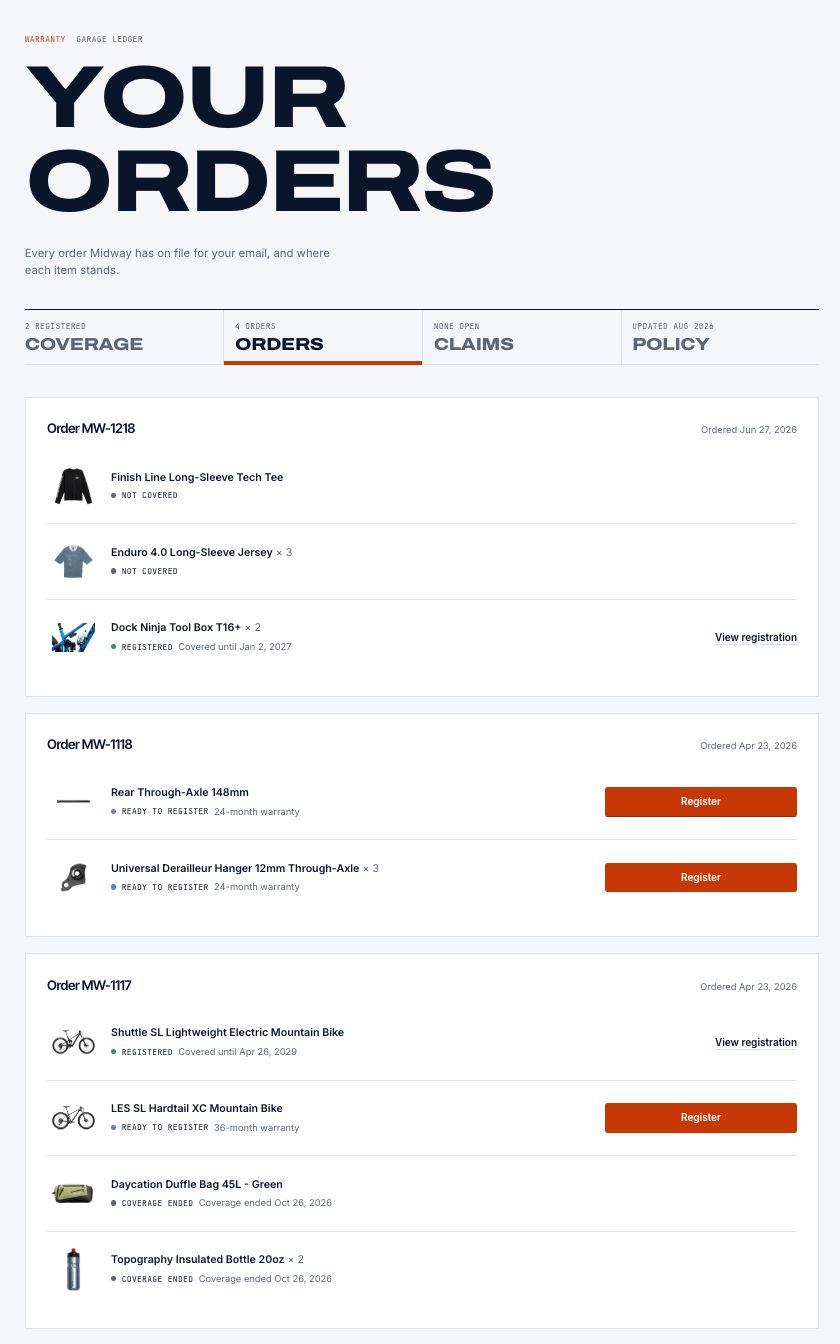
Open the Warranty tab and you land in the Midway Garage. The owner signs in with the email from their order and gets a one-time code. No password. From there they register each item to start its coverage, file a claim against a registered item, and track it to a decision. The policy page sits in the same design, with a link back to the owner’s coverage.
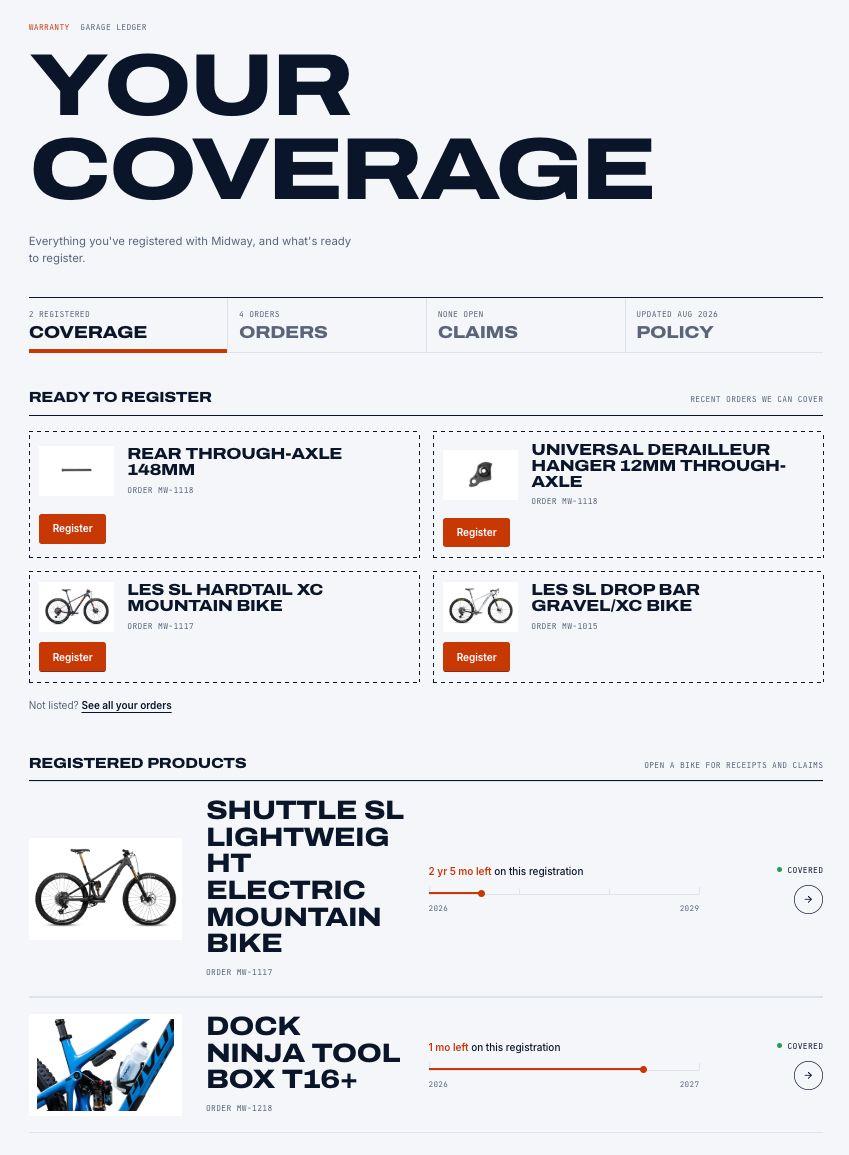
Every one of those steps is warrantini. The registration resolves against a real order line item. The coverage term locks the day the item is registered. The claim arrives in claims management already analyzed. Midway’s customers never see our screens, and Midway’s team never builds a warranty engine.
Here is the part that matters to the team running warranty. The claim a Midway owner files in Midway’s garage lands in claims management, the workspace the team runs, like any other claim. Same timeline, same assessment, same approve or reject.
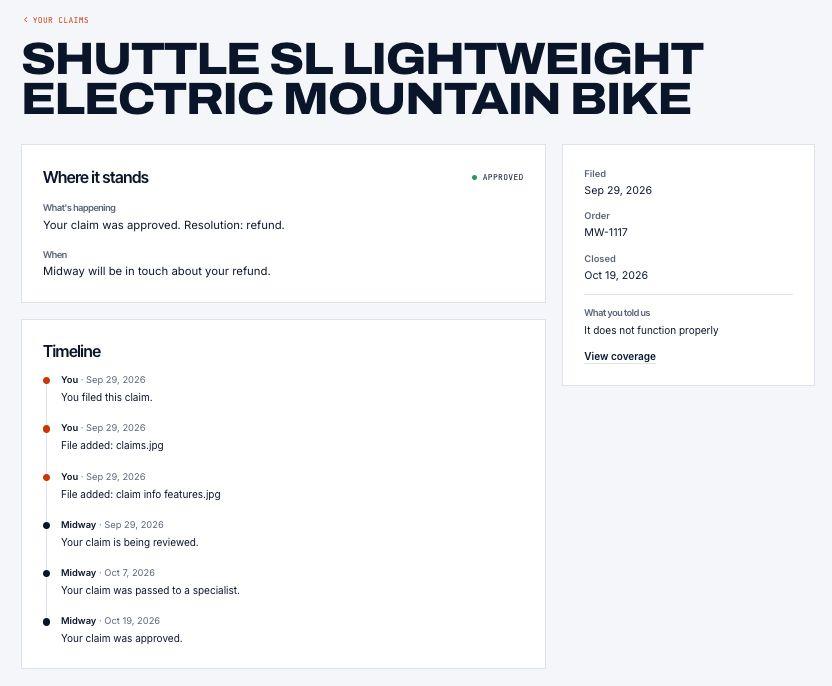
That’s the whole point of headless. The customer gets the brand’s experience. The team gets one system of record. Neither side gives anything up for the other.
You don’t have to choose up front.
| Mode | What your customers see | What your team uses |
|---|---|---|
| Turnkey | Our portal, in your brand | Our dashboard |
| Headless | Your own site or app | Your own tools, on the API |
| Both | Your own site or app | Our dashboard |
Midway is the third one, and it’s the common one. Customers only ever see the brand’s site. The team works claims in our dashboard.
Starting turnkey and going headless later isn’t a migration. Our own customer portal already runs on the public customer API. The contract you’d build against is the one we use in production every day.
A headless option is only as good as its API. When a vendor’s own screens run on a private path, the public API can fall behind them, and you find out when you need the feature it doesn’t have.
Our portal consumes the same public API you would. Headless parity is a requirement we already depend on. If the contract breaks, our own product breaks first, so it doesn’t get to rot.
If you’re the one building the front end, this is what you get to build on.
- The whole warranty record over one contract. Orders, products, registrations, claims, and coverage rules (read) on the REST API, with full lifecycle writes. Not a read-only slice.
- 21 REST endpoints, 13 webhook events, 9 scopes. Signed webhooks push warranty events to you as they happen. The REST API pulls what you need on your schedule.
- Test and live keys separated at the credential. The environment is baked into the key (
wrnt_test_…orwrnt_live_…) and checked on every request. A test key can’t touch live data. - A real sandbox. An isolated database branch with seeded orders, products, registrations, and rules. Build against realistic data, break it, reset it.
- Docs generated from the code. The OpenAPI spec comes from the route definitions, so it can’t drift. No SDK yet. Generate a client from the spec in your language today.
- Errors and retries you can program against. RFC 7807 problem details with stable type URIs, idempotency keys on every write, and cursor pagination on every list.
- A deprecation commitment in writing. No breaking changes within v1. If a version is superseded, both run for at least 90 days, with Deprecation and Sunset headers.
Midway’s pages render on its own server. Nothing in the visitor’s browser talks to warrantini directly, so API keys stay where they belong.
The scope is deliberate. Coverage rule writes, defect assessment and inspection, the return workflow, and account administration (settings, team, billing, API keys, portal configuration) stay on the merchant dashboard. Your storefront handles what your customers do. Your team handles the rest where it already works.
Headless isn’t free. Someone has to design and build the screens, and maintain them. If you don’t have a developer, or your site doesn’t need warranty to look like the rest of it, turnkey is the better start. You can run the portal in your brand today and build your own later, without moving anything.
If you have the developer and the brand matters, headless is the version where warranty stops looking like a bolt-on.
Walk through Midway eBikes for the customer side. Read the API reference for the contract underneath it, no account needed. For the platform side, see the developers page.