
You need warranty management software when three or more of the eight signs below are true of your brand. One or two is a process to tidy. Three or more is a process that has stopped working, and the cost is showing up somewhere you aren’t measuring.
Most DTC brands start warranty the same way: a form, a spreadsheet, and an inbox. It is a sensible start. It costs nothing and it works while claims are rare. The trouble is that it degrades quietly. Nobody decides to outgrow it. One day the person who knows how it works goes on vacation, and you find out.
Some come through the form. Some come to the support inbox. Some arrive as replies to an order confirmation, and a few as direct messages on Instagram. Each one is a claim. None of them know about the others.
A second email is the customer telling you they can’t see what’s happening. Every one of those is a contact your team handles by hand, on a claim that hasn’t moved.
You could work it out. It would take an afternoon with the spreadsheet. That is the tell: the data exists, but it isn’t a record anyone can query.
If they bought from your store, you already have the order. Asking for a receipt is the slowest step in the claim, and the easiest to fake.
A customer files a claim, hears nothing for a week, and files again. If the two land with different people, you might replace the item twice.
A customer says the coverage was two years. The product page said one. The policy PDF says eighteen months. Nobody is sure which version applied on the day they bought it.
Warranty lives in someone’s head and their inbox. When they’re out, claims wait. When they leave, the process leaves with them.
Replacements ship, refunds go out, and the cost lands in a general line nobody attributes to warranty. You don’t know whether it’s rising.
The mechanism is labor. Manual and legacy claims processing runs $35–50 or more per claim. The industry average with a system is $15–25, and top performers run $5–10. Labor is 60–70% of that cost.
Time moves the same way. Manual claims take 7–14 days. The industry average is 3–5 days. Top performers resolve in under 24 hours.
Signs 1, 2 and 7 are labor. Signs 4 and 5 are labor and leakage. Signs 3, 6 and 8 are the ones that don’t show up in any count, because they are about what you can’t see. For a worked version of the arithmetic, read the real cost of running warranty on a form, a spreadsheet, and an inbox.
Count the signs that are true for you today.
| Signs true | What it means |
|---|---|
| 0–2 | A form and a clear policy are still doing the job. Tidy the process. |
| 3–5 | The process works because people work around it. The cost is real and unmeasured. |
| 6–8 | Warranty is running on goodwill. Every new claim adds labor. |
If you’ve counted three or more, here is what to look for. Each one answers at least one sign.
- One intake. Claims come in through one portal and land in one workspace. Answers sign 1.
- Status the customer can see. A portal where the owner follows the claim to a decision. Answers sign 2.
- A record by product. Claims tied to the SKU, so volume by product is a filter, not a project. Answers sign 3.
- Order-backed registration. Registrations resolve against the real order. Answers signs 4 and 5.
- Coverage locked at registration. The terms that applied on the day are the terms that apply. Answers sign 6.
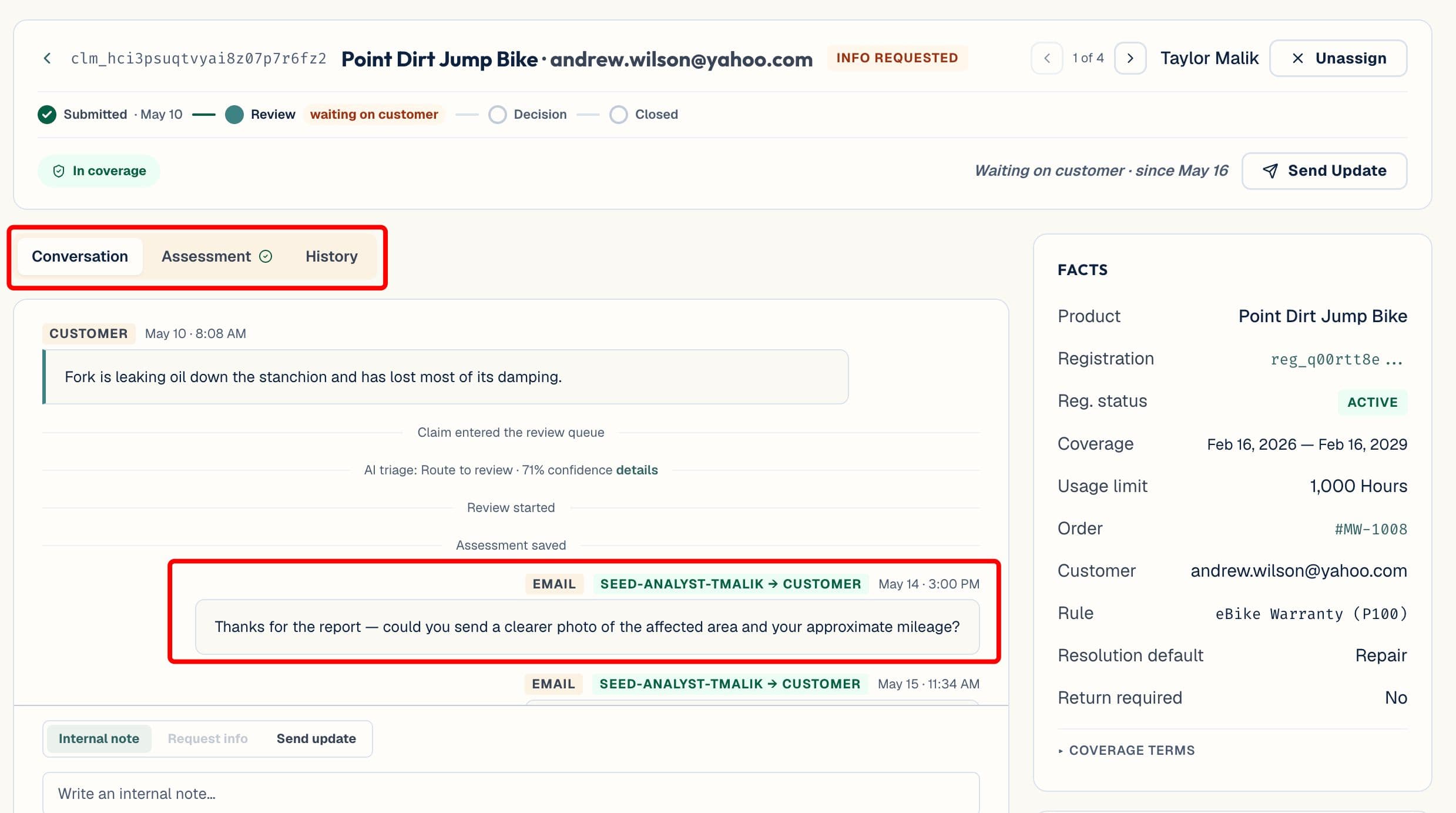
- The claim as the record. Notes, photos, decisions and the customer conversation on one timeline anyone can pick up. Answers signs 7 and 8.
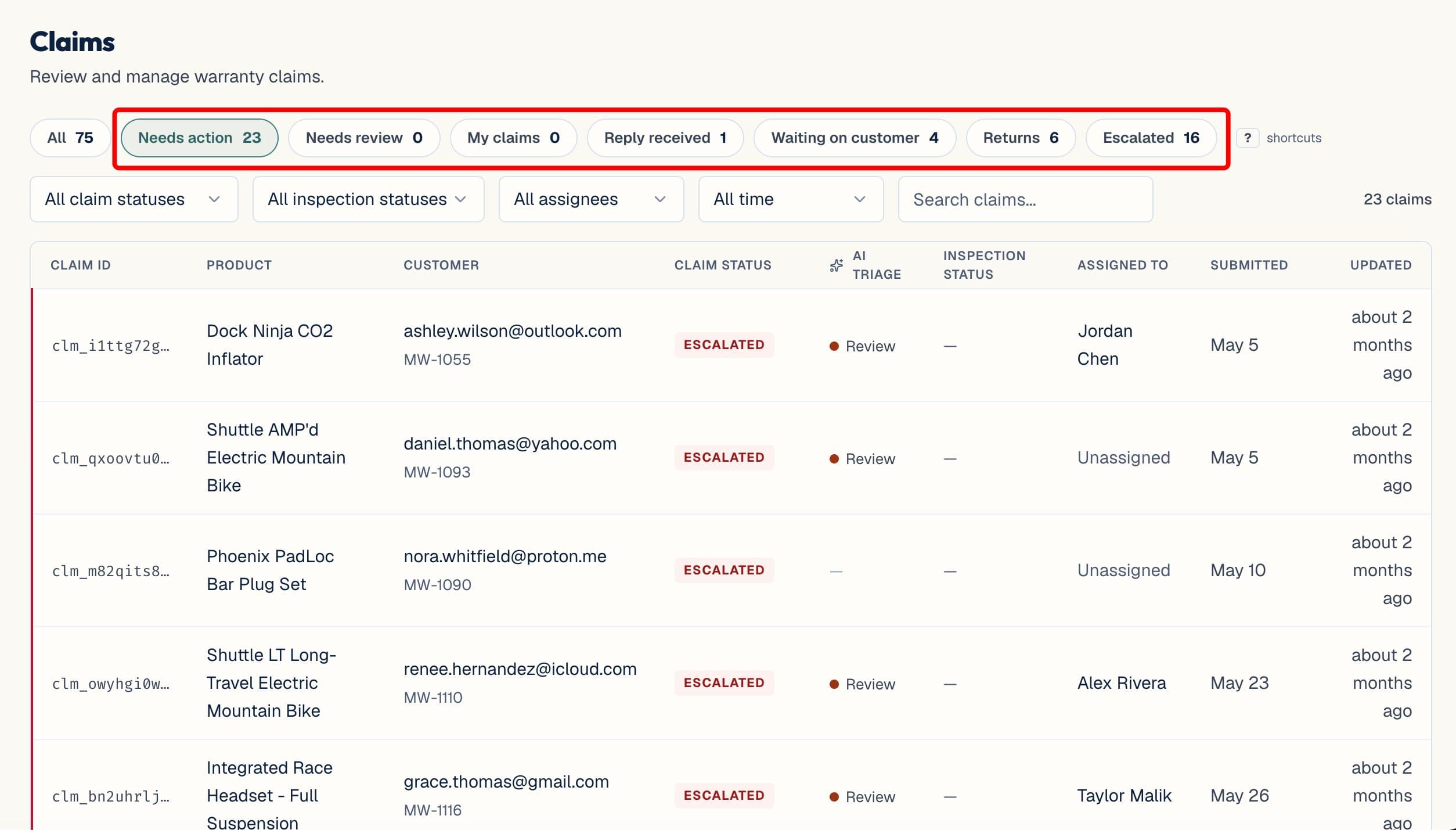
warrantini is three working parts on one record. Coverage rules turn your warranty policy into rules the system enforces, and show every product as covered, excluded, or in a gap before you publish. The customer portal lets owners register, check coverage, and file a claim with photos. Claims management is the workspace your team runs, where claims arrive already analyzed and your team approves or rejects.
Pricing is flat, from $49 a month, with no per-claim fee. For what the category costs more broadly, read warranty software under $500 a month.
If claims are occasional, one person handles them comfortably, and you sell through one channel, a form and a clear written policy are fine. Software won’t fix a policy nobody has written down. Write the policy first.
The point of the eight signs is not that every brand needs software. It is that the move should be a decision, made when the signs show up, rather than something you discover after the person holding it all together leaves.
A helpdesk tracks tickets. Warranty software tracks coverage terms, registrations, claims, and inspections. A ticket closes. A warranty runs for years.
Connecting your store and publishing the portal is quick. Turning your warranty policy into coverage rules, and deciding how claims move through your team, takes longer, because those are decisions about your business. We help with all of it at no charge.